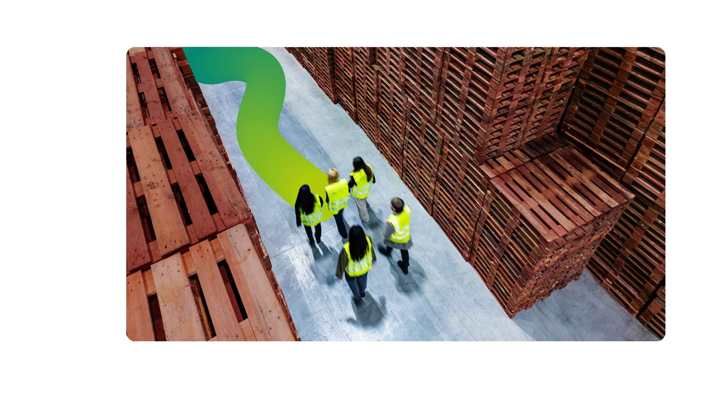

Sustainability Report 2024
IPP’s parent company Faber Group has published its third annual Sustainability Report as it aims to become net zero by 2045.
Report reveals sustainability progress of pallet pooler
The latest sustainability report from a leading European pallet pooling specialist reveals a collective saving of more than 40,000 tonnes of CO₂ emissions - the equivalent of 177 million miles of driving.

Hygiene Pallets (food safe pallets)
Ensuring safety in the supply chain is the number one priority for manufacturers and retailers in the food and drink industry. Hygienic pallets, which are also known as food grade pallets, play a major role in moving goods from A to B in a secure and hygienic way.

From regulation to real impact: how reusable pallets support circular supply chains across Europe.
In 2022, the EU generated an estimated 186.5 kg of packaging waste per person. To address this, the Packaging and Packaging Waste Regulation (PPWR) is setting a bold new course for how packaging should be designed, used, and recovered.
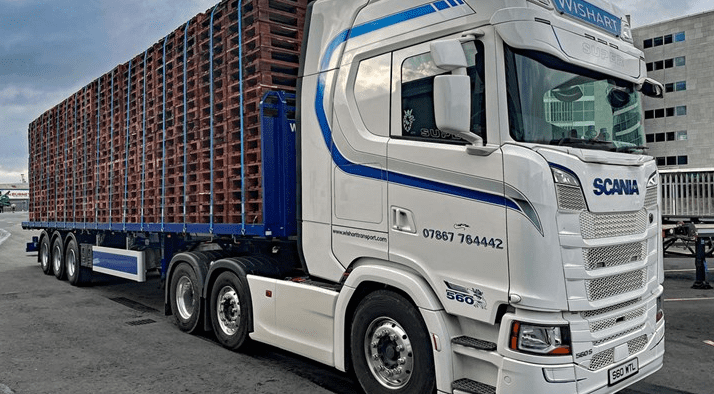
Understanding empty running
At IPP, we’re committed to reducing empty running and working closely with our logistics partners and customers to remove empty miles from their transport operations. Here, we take a closer look at the harmful effects of empty running and provide recommendations for reducing this practice through data, optimisation and collaboration.

Reinforcing circularity, transparency and sustainability this World Environment Day
World Environment Day 2025 is a reminder that sustainability must be more than ambition – it must be actionable, visible, and accountable. At IPP, this is embedded in how we operate every single day. From the way we design our pooling network to the choices we make around efficiency and reuse, our closed-loop pooling model already reflects the values that World Environment Day promotes: reducing environmental impact, prioritising reuse over waste, and designing systems that keep resources in use longer.