
15 July 2026
As a major user of wooden pallets, the dairy industry requires extremely high quality standards to meet the growing demands of increasingly automated distribution chains. At the same time, milk consumption remains highly dynamic on an international scale, particularly in emerging countries. In this context, IPP’s rental pallet model stands out as a preferred partner for industrial players in the sector.
A supply chain under constraints
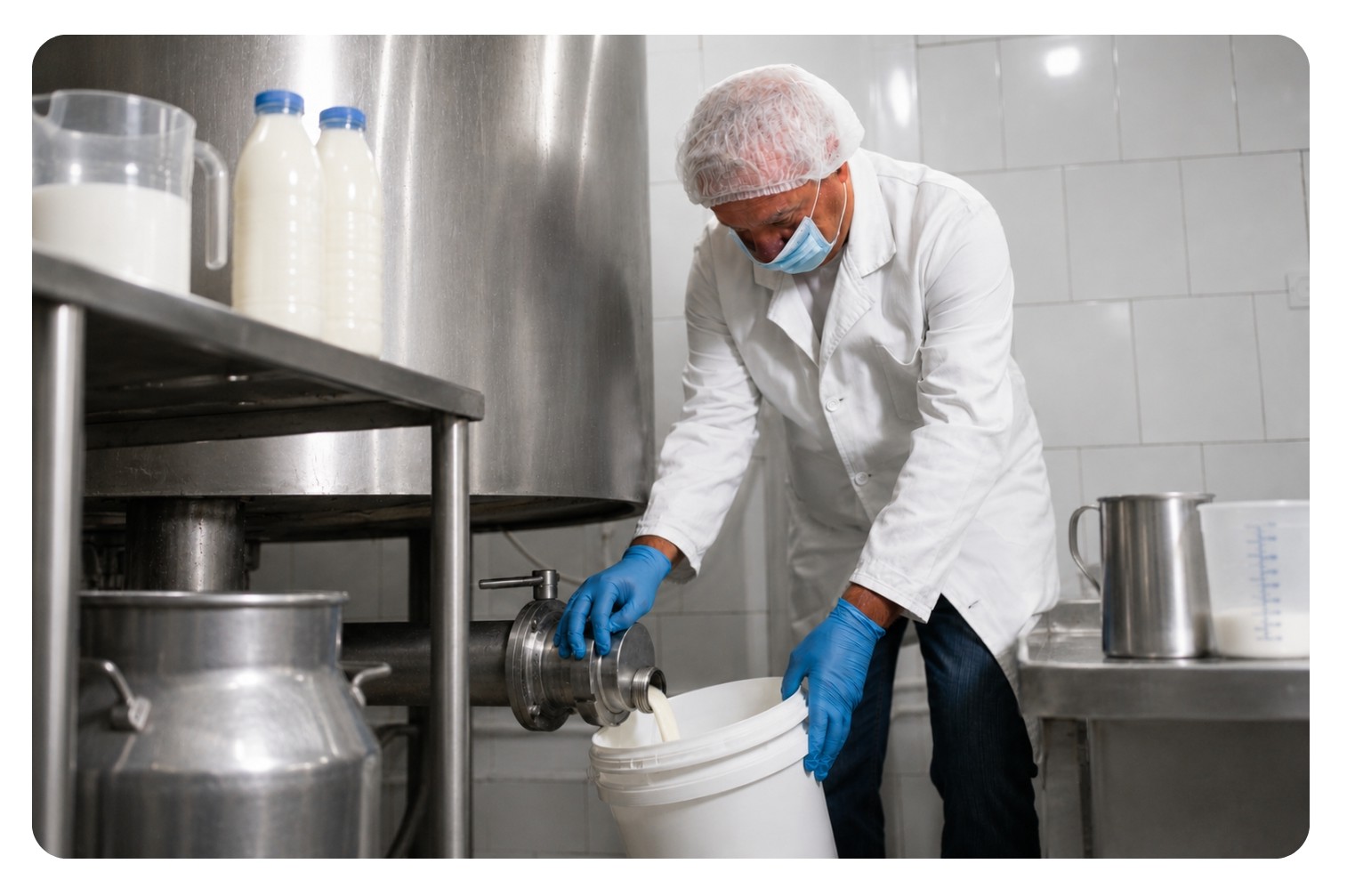
The dairy industry relies on a dense and demanding supply chain. Milk is packaged in a wide variety of formats that are increasingly diverse: 20 cl, 50 cl, 1-litre bottles, slim or standard cartons… more than 10 different references must be palletised in a perfectly stable way. In this context, the quality of the pallet becomes a key factor in keeping operations running efficiently.
Automation increases quality requirements
Warehouse automation in large-scale retail further reinforces these requirements. Modern systems, such as automated storage and retrieval systems or automated depalletising lines, instantly detect the slightest non-conformity. A slightly warped pallet, a damaged board, or uneven height is enough to trigger an automatic rejection. These non-conformities generate delays, disputes and financial penalties, and can even lead to a complete production shutdown, directly impacting the continuity of milk collection through to the final customer. The pallet is no longer just a logistics asset, it becomes a critical enabler of flow efficiency and operational performance.
Why dairy leaders are switching to IPP’s rental model
This are the reasons why many dairy manufacturers are choosing IPP's circular pooling system:
- Reliable pallet quality for automated operations
Many dairy manufacturers still sort pallets themselves, mobilising significant resources and creating friction with transport providers. With IPP, pallet quality is consistent, controlled and compatible with automation requirements.Through our European network of repair centres, manufacturers can rely on high quality pallets that help reduce disruptions, minimise disputes and keep warehouse operations running smoothly.
- Supporting seamless operations across the supply chain.
With the rise of automated systems, retailers demand flawless pallets. IPP’s rental model simplifies exchanges, reduces rejections and improves commercial relationships.
- The third reason is environmental
The IPP rental pallet model is based on a circular system grounded in reuse, repair and extended service life of pallet assets. It supports manufacturers' sustainability ambitions while helping improve operational efficiency and preparing forregulatory developments such as the PPWR.
Already adopted by industry leaders, this model has become central to the dairy supply chain. It provides operational peace of mind, allowing teams to focus on a single goal: optimising performance IPP supports companies in enabling a smarter flow of goods, thanks to human expertise, customer proximity, innovation and the circular economy. This approach helps create more agile, more efficient and, consequently, more sustainable supply chains.